Difference in Difference

Eduard Bukin

Recap

The basics:

  • The ceteris Paribus

  • Selection Bias

  • OVB

  • Quasi-experimental design: DID

    • Why do we need it?

Difference in Difference

DID
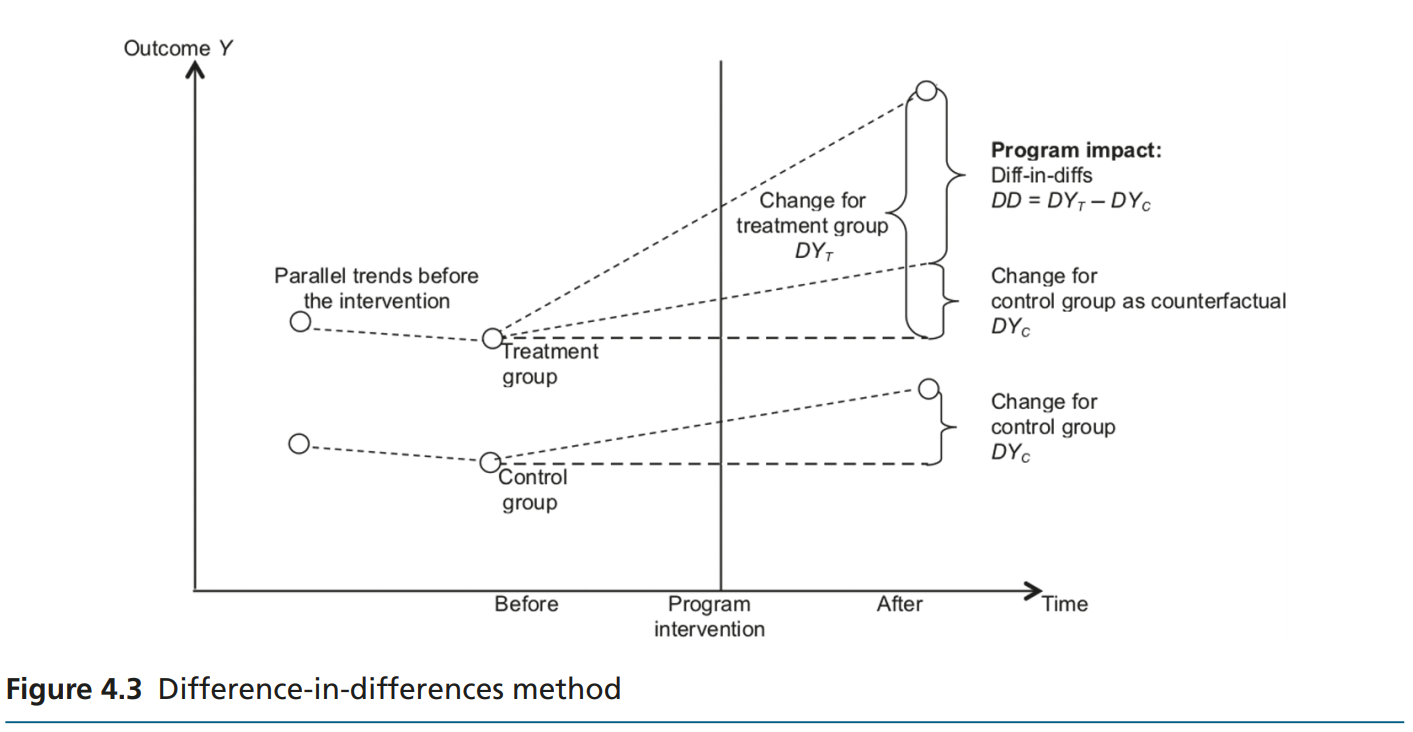
Assumptions

  1. Parallel trends

  2. Linear Additive Effect

  3. All GM assumption of the linear regression

Learn more about DID:

Watch: Introduction to Differences-in-Differences https://youtu.be/eiffOVbYvNc

Read:

  1. (Angrist & Pischke, 2014, Chapter 5)

  2. (Angrist & Pischke, 2009, also Chapter 5)

  3. (de Janvry & Sadoulet, 2021, Chapter 4)

  4. (Card & Krueger, 1994)

Example 1. Otrachshenko, Popova, & Tavares (2016)

Reproducing:

  • Otrachshenko, V., Popova, O., & Tavares, J. (2016). Psychological costs of currency transition: evidence from the euro adoption. European Journal of Political Economy, 45, 89-100.

Example 2. Card & Krueger (1994)

The Minimal Wage debate. See Economist’s short “The minimum wage: does it hurt workers?” (https://youtu.be/8H4yp8Fbi-Y)

Research question and the setting

Causal effect of the minimum wage policy on employmnet is not negative.

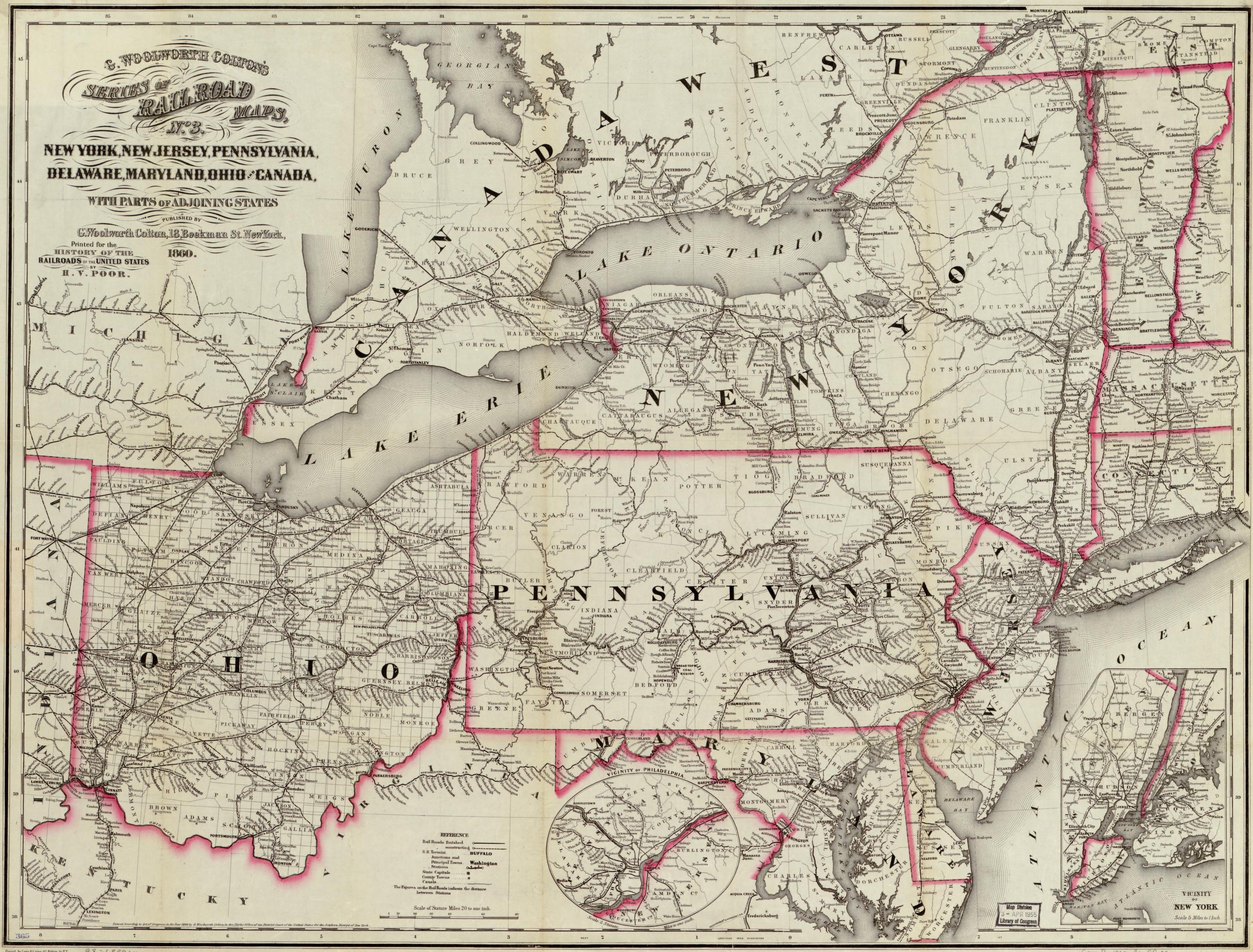
  • Two states: New Jersey (NJ) and Pennsylvanian (PA)

  • Two time periods: Before and after

  • Treatment: Minimal Wage in one state (New Jersey) only

Geography

Empirical problem

\[ Y_{jt} = \beta_0 + \beta_1 \text{NJ}_j + \beta_2 \text{Time}_t + \beta_3 (\text{NJ}_j \times \text{Time}_t) + \beta_4 X_{jt} + \epsilon_{jt} \]

Where:

  • Outcome: \(Y_{jt}\) - Employment level at the key fast food chains, Full Time Equivalent persons.

  • Treatment: Minimal wage policy in NJ \(\text{NJ}_j\) indicator variable where 1 = NJ, and 0 = PA.

  • Time: \(\text{Time}_t\) indicator variable where 0 = before, and 1 = after.

  • What are we expecting to find?

  • What are the expected values of the coefficients?

    • If the minimal wage policy reduces employmnet.
    • If the minimal wage policy increases employmnet.

Practical exercise in R

Let us estimate \(\beta_3\) now using R and corresponding data.

References

References

Angrist, J. D., & Pischke, J.-S. (2009). Mostly harmless econometrics. Princeton University Press. http://doi.org/10.1515/9781400829828
Angrist, J. D., & Pischke, J.-S. (2014). Mastering’metrics: The path from cause to effect. Princeton University Press.
Card, D., & Krueger, A. B. (1994). Minimum wages and employment: A case study of the fast-food industry in new jersey and pennsylvania. The American Economic Review, 84(4), 772–793. Retrieved from http://www.jstor.org/stable/2118030
de Janvry, A., & Sadoulet, E. (2021). Development Economics : Theory and Practice. Taylor & Francis Group.
Otrachshenko, V., Popova, O., & Tavares, J. (2016). Psychological costs of currency transition: Evidence from the euro adoption. European Journal of Political Economy, 45, 89–100. http://doi.org/10.1016/j.ejpoleco.2016.10.002