Standard Deviation
represents the “typical” deviation of observations from the mean.
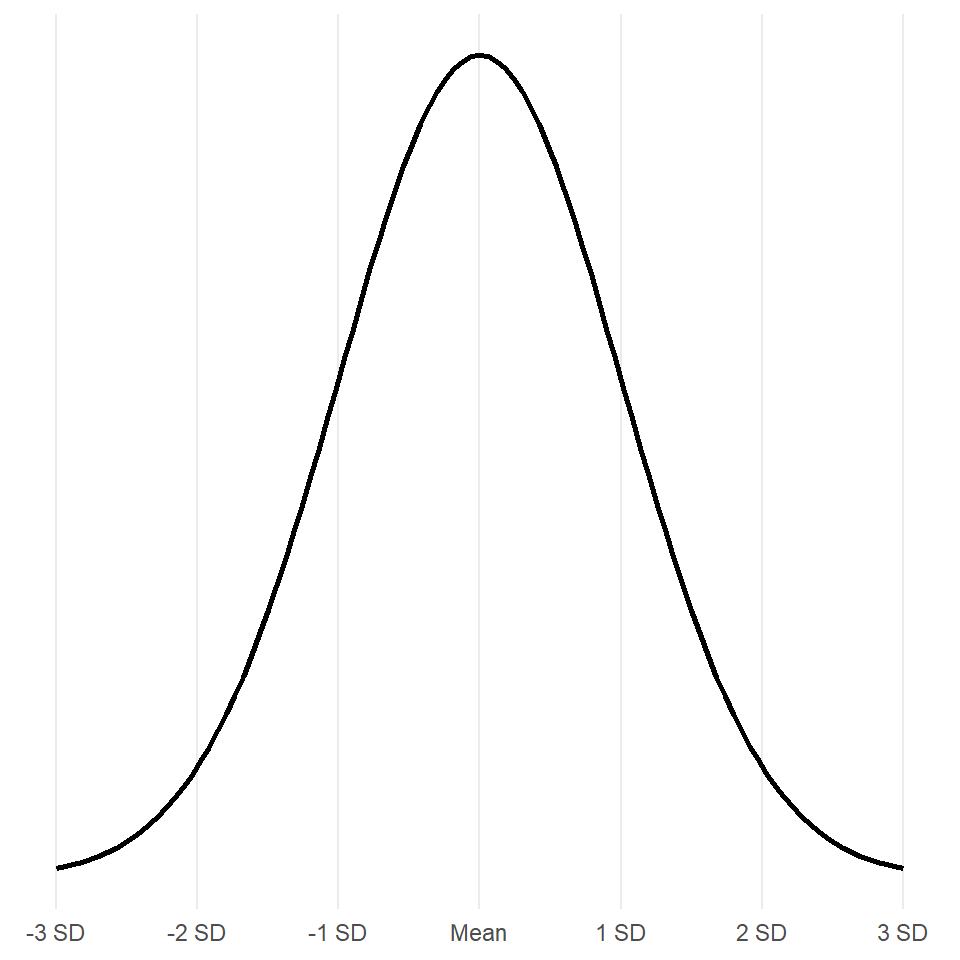
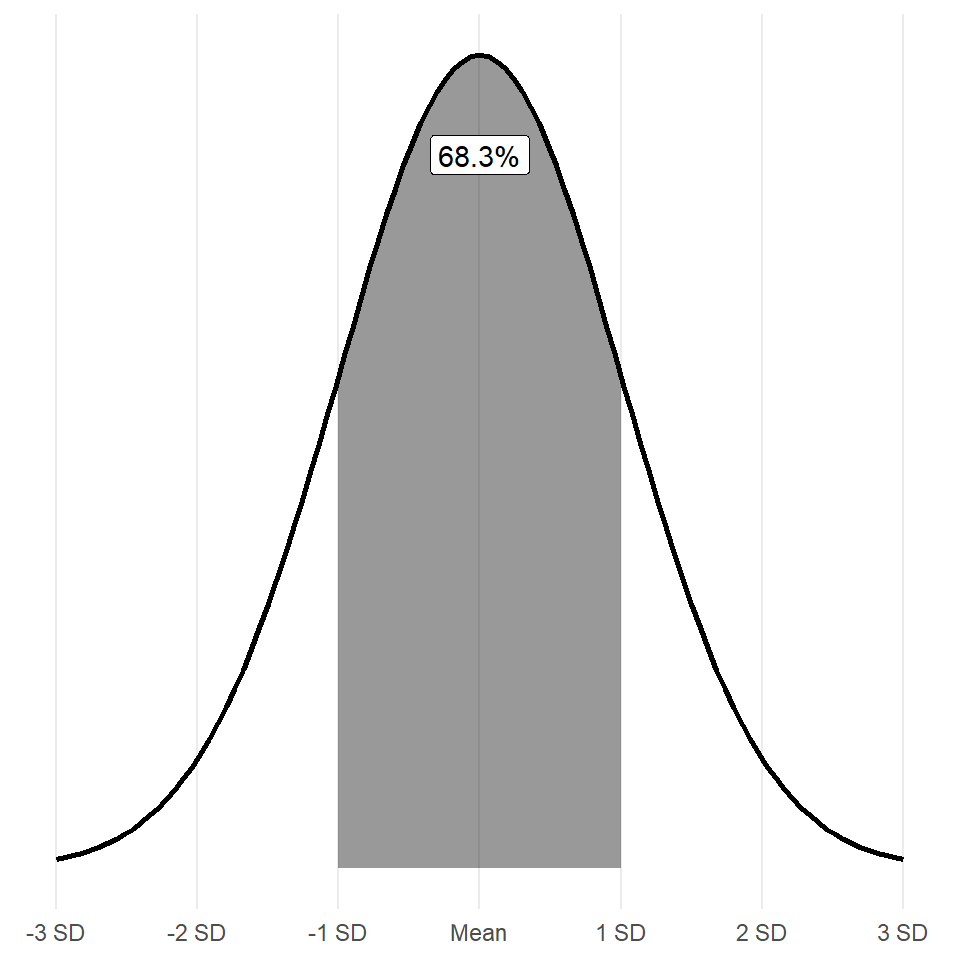
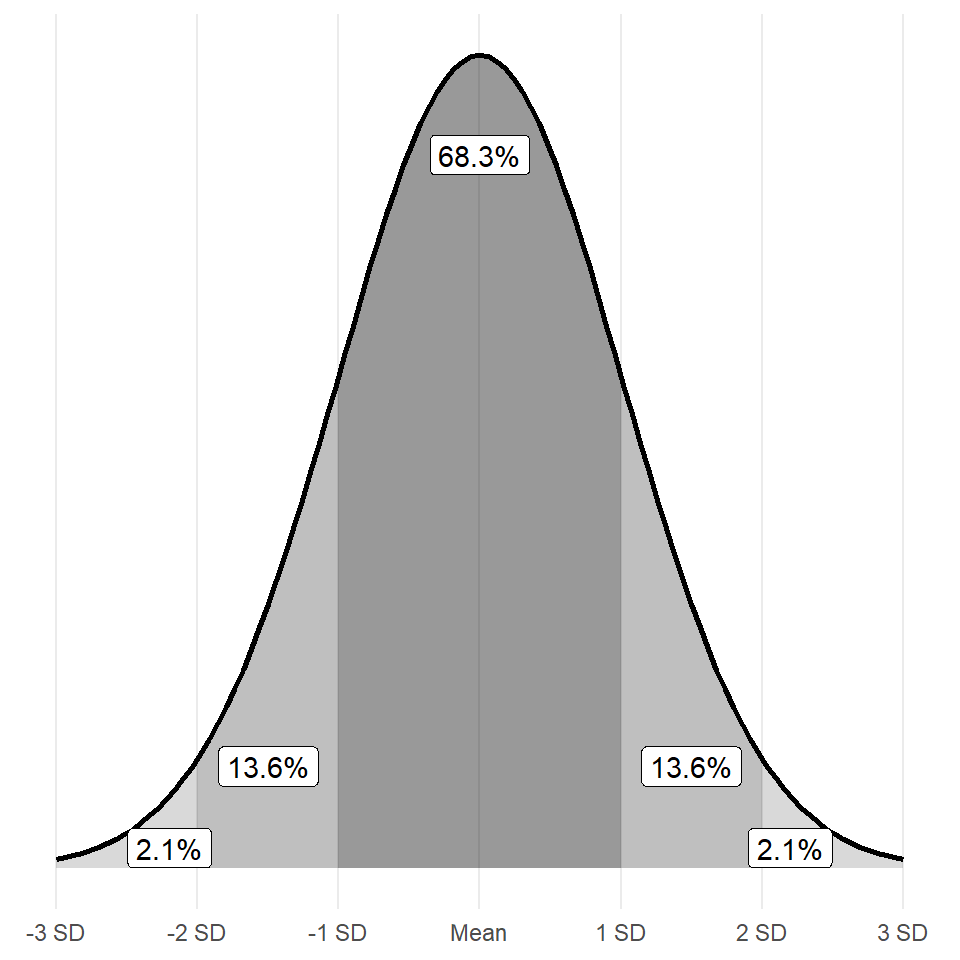
If the distribution is normal:
- 68.3% obs. are in +-1 SD;
- 95.4% obs. are in +-2 SD;
- 99.7% obs. are in +-3 SD;
The standard deviation is in the same units of measurement as the measured variable.
Not every distribution is normal, but SD can be the same
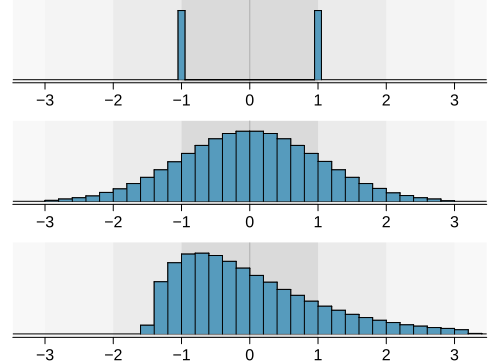
Note
A good description of distribution should include
Central tendency;
SD (Variance);
Description of the shape;
modes
symmetry / skew
Diez, David, Mine Cetinkaya-Rundel, and Christopher D Barr. 2022. OpenIntro Statistics: Fourth Edition. OpenIntro. https://www.openintro.org/book/os/.
Dowdy, Shirley, Stanley Weardon, and Daniel Chilko. 2004. Statistics for Research. John Wiley & Sons, Inc. https://doi.org/10.1002/0471477435.